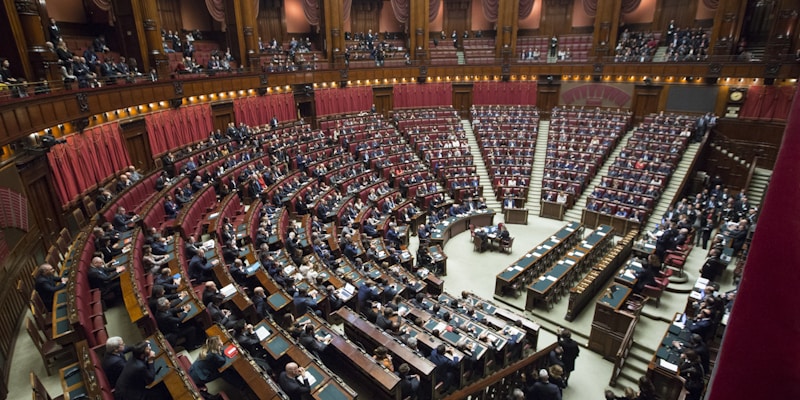
AI industry pours hundreds of millions into 2026 US midterm elections divided over regulation
As the 2026 U.S. midterm elections approach, the artificial intelligence industry is injecting hundreds of millions of dollars into political campaigns, signaling a new era of technological influence in Washington....
As the 2026 U.S. midterm elections approach, the artificial intelligence industry is injecting hundreds of millions of dollars into political campaigns, signaling a new era of technological influence in Washington. However, this financial surge is not a monolithic effort. The industry is deeply fractured over the critical issue of government regulation, creating a complex and contentious political landscape. Federal Election Commission (FEC) filings reveal that millions of dollars are flowing from key AI players to political action committees supporting both Democratic and Republican candidates, yet their visions for the future of AI governance are starkly divergent.
At the heart of this division are two opposing philosophies. On one side is the pro-regulation camp, led by companies like Anthropic, the developer of the AI model Claude. Arguing that AI presents "considerable risks," Anthropic has committed $20 million to Public First Action, a group dedicated to supporting candidates who advocate for stronger government oversight of the technology. This organization is already running advertisements thanking specific politicians for their records on AI, aiming to build a coalition of lawmakers who will champion robust safety and ethical standards.
On the other side of the debate is the innovation-first contingent, prominently represented by OpenAI, the creator of ChatGPT. While OpenAI supports establishing "common-sense rules of the road," it cautions against overly restrictive regulations that could stifle American innovation and cede technological leadership to other countries, particularly China. Underscoring this position, OpenAI co-founder Greg Brockman and his wife have personally donated $25 million to a super PAC named Leading the Future. This group champions candidates who prioritize the economic benefits of AI and resist policies that could hinder technological progress. The PAC has already spent significantly to support candidates who echo its message, emphasizing the need to win the global AI race.
The ideological clash is playing out vividly in specific electoral contests, with New York's 12th Congressional District serving as a prime battleground. Democratic candidate and Assemblyman Alex Bores, who co-sponsored a state-level AI safety bill, has found himself at the center of the storm. A PAC associated with the pro-regulation Public First Action has endorsed Bores. In stark opposition, the OpenAI-linked Leading the Future has spent over $2.2 million on a campaign against him, labeling him a "hypocrite" whose policies would allegedly undermine America's AI leadership. This direct confrontation highlights the high stakes involved.
Experts view this spending blitz as a strategic battle to define the foundational rules that will govern a transformative technology. "It's sort of an open question as to what regulation is going to look like," David Primo, a professor at the University of Rochester, told ABC News. "The stakes are really high because once a regulatory system gets entrenched, it's really hard to change it." This fight is not merely about partisan politics but about shaping the regulatory environment for decades to come, with each faction vying to embed its own principles into law.
Tools Mentioned in This Article
ChatGPT
Conversational AI by OpenAI. Handles natural conversations, writing, code generation, and more.
Claude
Safety-focused AI assistant by Anthropic. Excels at long-form processing and analysis.
DeepL
High-accuracy AI translation service. Renowned for natural translation quality.
Lex
AI writing editor. Optimized for long-form content writing.
AI Newsletter
Get the latest AI tools and news delivered daily